Tragedy on 2nd Street: The True Story of Lizzie Borden EP# 0008

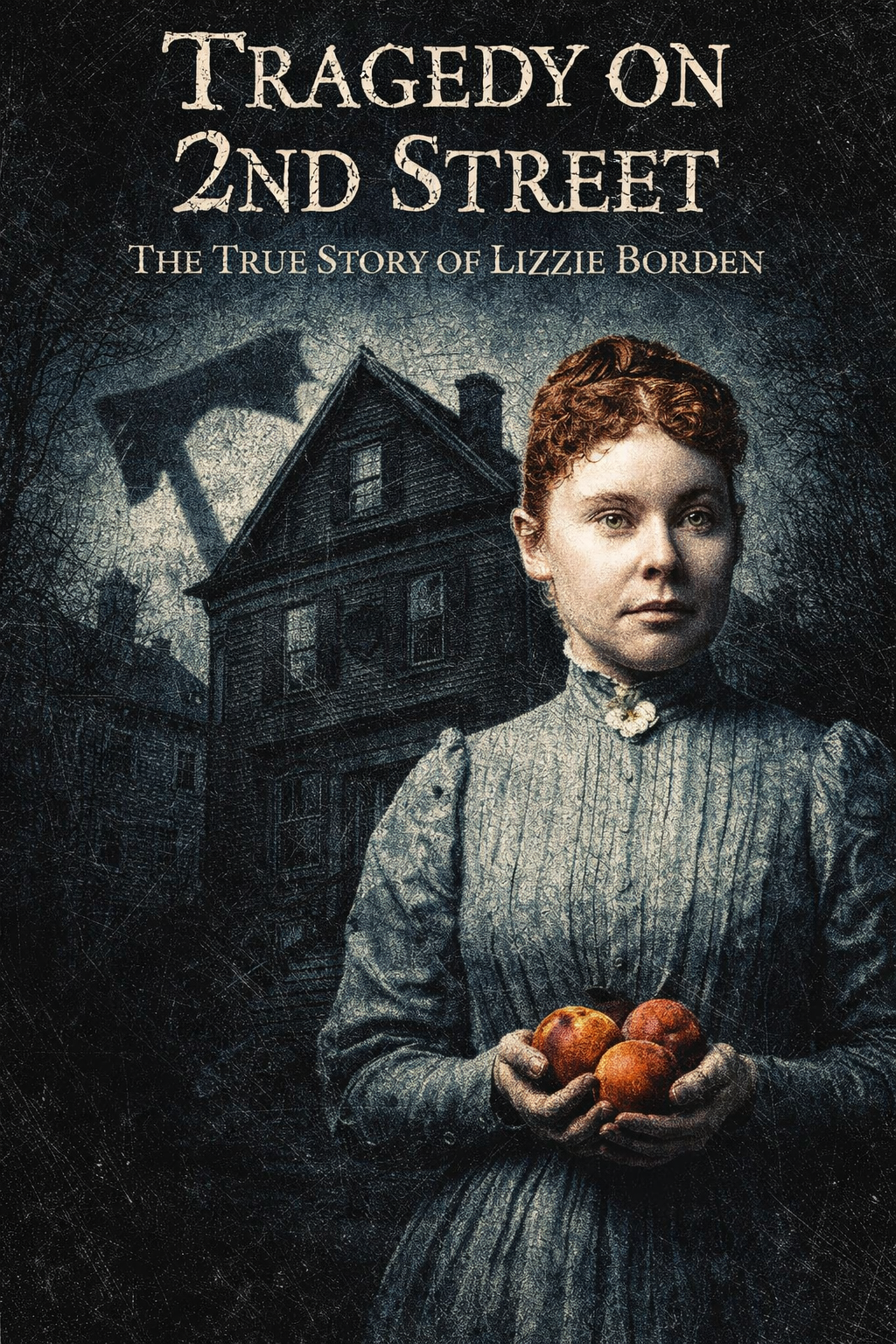
Fall River, Massachusetts, woke under a suffocating sun on August 4, 1892. Factory smokestacks choked the sky with black smoke, and the heat clung to the narrow streets like a curse. Inside a modest house at 92 Second Street, windows were sealed tight against the air, trapping more than warmth within its walls. By nightfall, this quiet New England city would become infamous, its name forever bound to one of America’s most unsettling unsolved crimes.
Andrew Borden was a wealthy man, but his household reflected none of it. Known for his extreme frugality, he ruled his home with iron restraint. Meals were repetitive and joyless, with tensions simmering just beneath polite silence. That morning’s breakfast—cold, leftover mutton—was the final insult. Lizzie Borden, thirty-two years old and visibly repulsed, could no longer bring herself to eat what felt like a daily punishment.
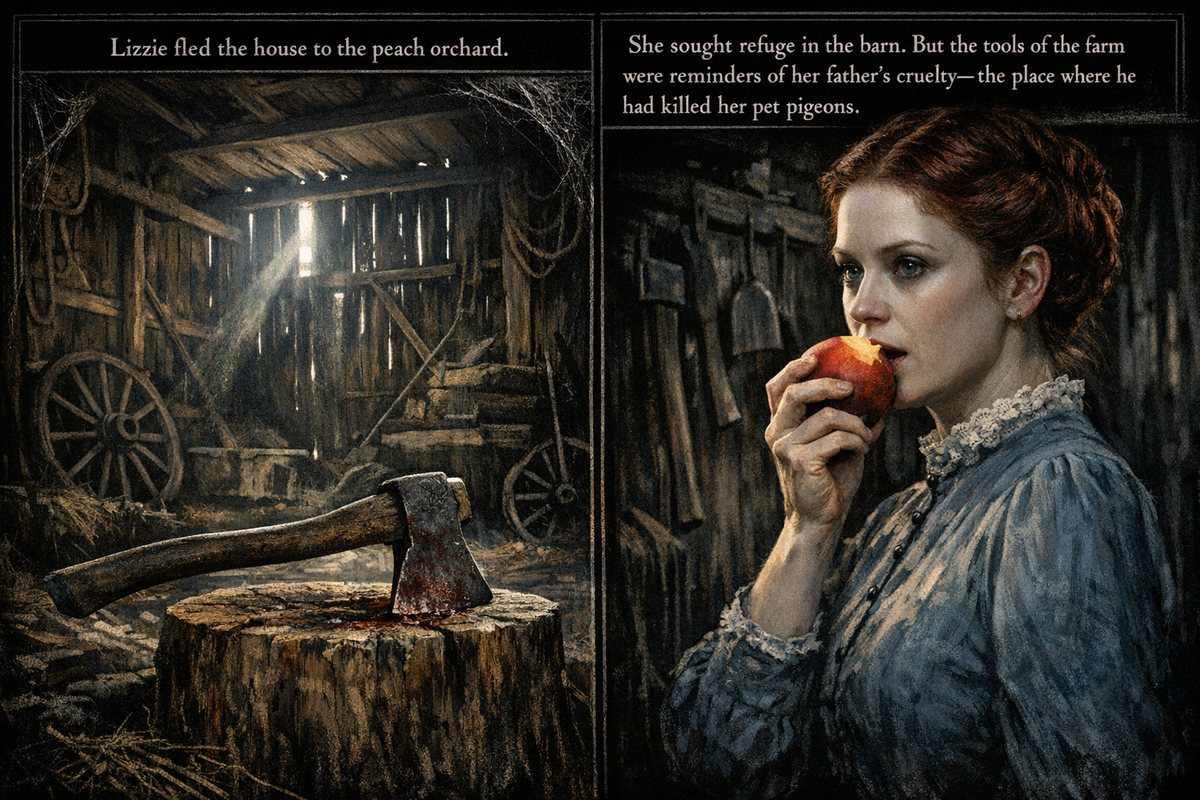
Seeking escape, Lizzie wandered out to the barn, where sunlight pierced dusty beams and spiderwebs hung like lace. There, resting on a chopping block, lay a hatchet—ordinary, utilitarian, and ominous. Lizzie ate fresh peaches in the shade, their sweetness a sharp contrast to the bitterness she felt toward her father, who had once slaughtered her beloved pigeons in that very place. The barn held silence, but it also held memory.
At approximately 9:30 a.m., Abby Borden went upstairs to make the guest bed. She never came back down. In the quiet of the guest room, she was attacked from behind and struck nineteen times. No screams echoed through the house. Her body lay undiscovered for nearly two hours, hidden in plain sight above the family’s daily routines.
Around 11:00 a.m., Andrew Borden returned home and stretched out on the sitting room sofa to rest. Moments later, he too was brutally murdered, struck repeatedly in the face with a hatchet-like weapon. Lizzie called out calmly for the maid, claiming someone had entered the house and killed her father. There were no signs of forced entry. No strangers were seen leaving the home.
As police searched the house, unsettling details emerged. In the basement, officers found a hatchet head with no handle, coated in dust and ash. Its purpose was unclear, but its presence was impossible to ignore. Even more troubling was Lizzie’s behavior—unemotional, erratic, and contradictory. She was later seen burning a blue dress, explaining it away as ruined by paint, though no painter had been in the house.
Newspapers exploded with speculation. Headlines spun wildly, casting Lizzie as either a cold-blooded murderer or a victim of cruel circumstance. On August 11, she was arrested. Public opinion fractured along lines of gender and class. Could a churchgoing woman of means commit such savage violence? Or was she being targeted because the truth was too uncomfortable to accept?
The trial began in June 1893 and became a national spectacle. The prosecution had no eyewitnesses, no murder weapon handle, and no bloodstained clothing. The defense leaned heavily on societal norms, arguing that a woman of Lizzie’s standing was incapable of such brutality. After just ninety minutes of deliberation, the jury delivered its verdict: not guilty.
Lizzie Borden walked free. She inherited her father’s estate and purchased a grand home on the hill called Maplecroft. Yet freedom came with isolation. Shunned by Fall River society, she lived out her days under a cloud of suspicion, her wealth unable to buy peace. She died in 1927, taking whatever truth she knew with her.
More than a century later, the question lingers in the shadows of 92 Second Street. Was she an innocent woman or a killer who managed to evade justice? The house remains. The rhyme endures. And the truth—whatever it was—died with Lizzie Borden.