The Widow of Beaver Creek: The Haunting Legend of Esther Hale EP #0007

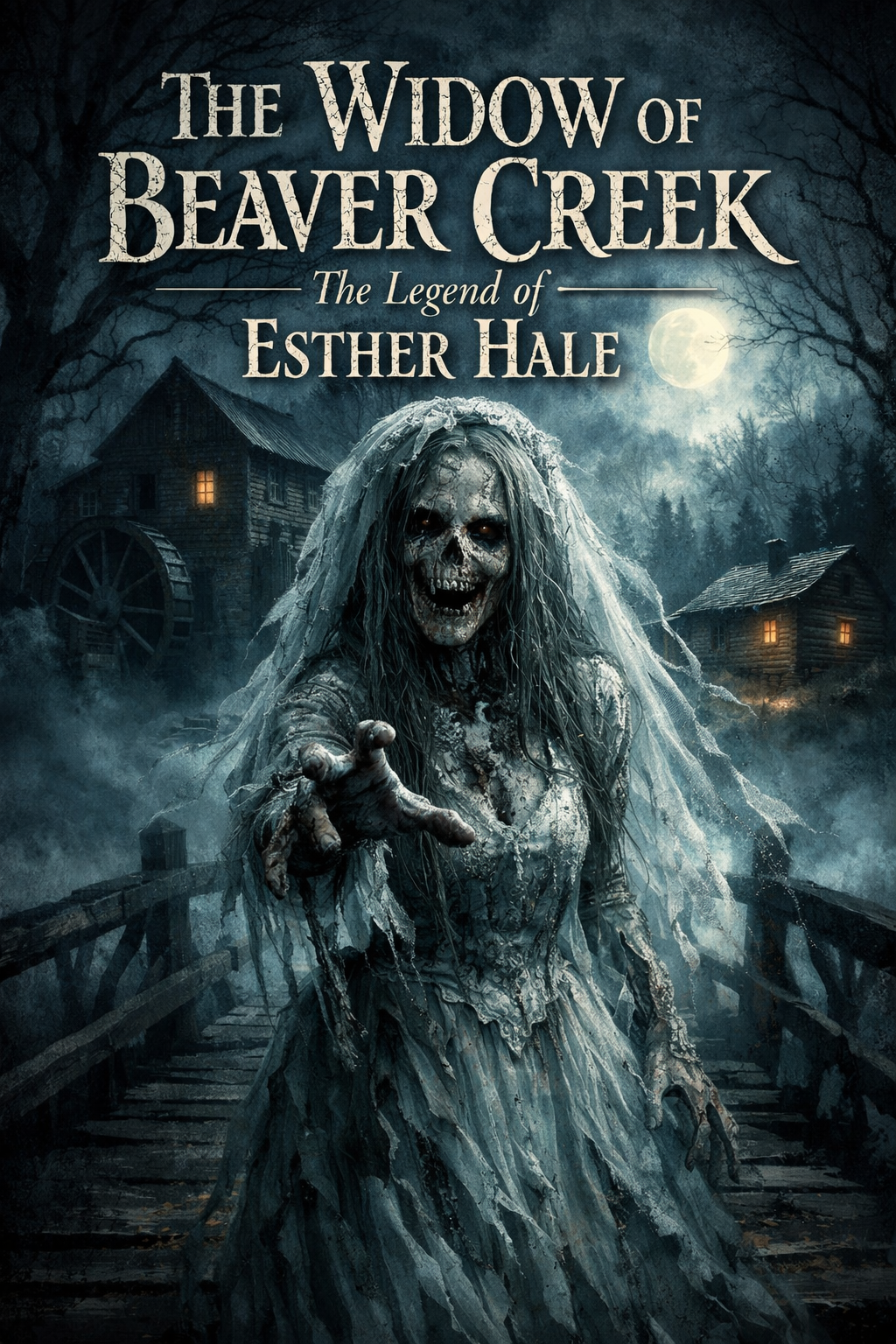
Folklore is a mirror. It reflects what a place fears, what it mourns, and what it refuses to let go of. But mirrors can crack, and when they do, the reflection splits. In Beaver Creek, Ohio, the legend of Esther Hale has always carried two faces—one of quiet tragedy and one of something far darker.
The story begins on August 12th, a late-summer morning when the woods were green, the sun was bright, and nothing yet felt cursed. Esther Hale was to be married that day. She had prepared everything herself in her small log cabin near the creek: the cake, the flowers, and the dress. Dressed in white lace, she stood before a small mirror, adjusting her veil and smiling, as if trying to memorize the moment before it slipped away.
Guests arrived as planned. The minister came, Bible in hand. The cabin filled with murmured conversation and polite anticipation. Esther stood at the front, hands folded, waiting. Ten o’clock passed. Then eleven. By half past noon, the ticking of the clock became unbearable. The groom never arrived.
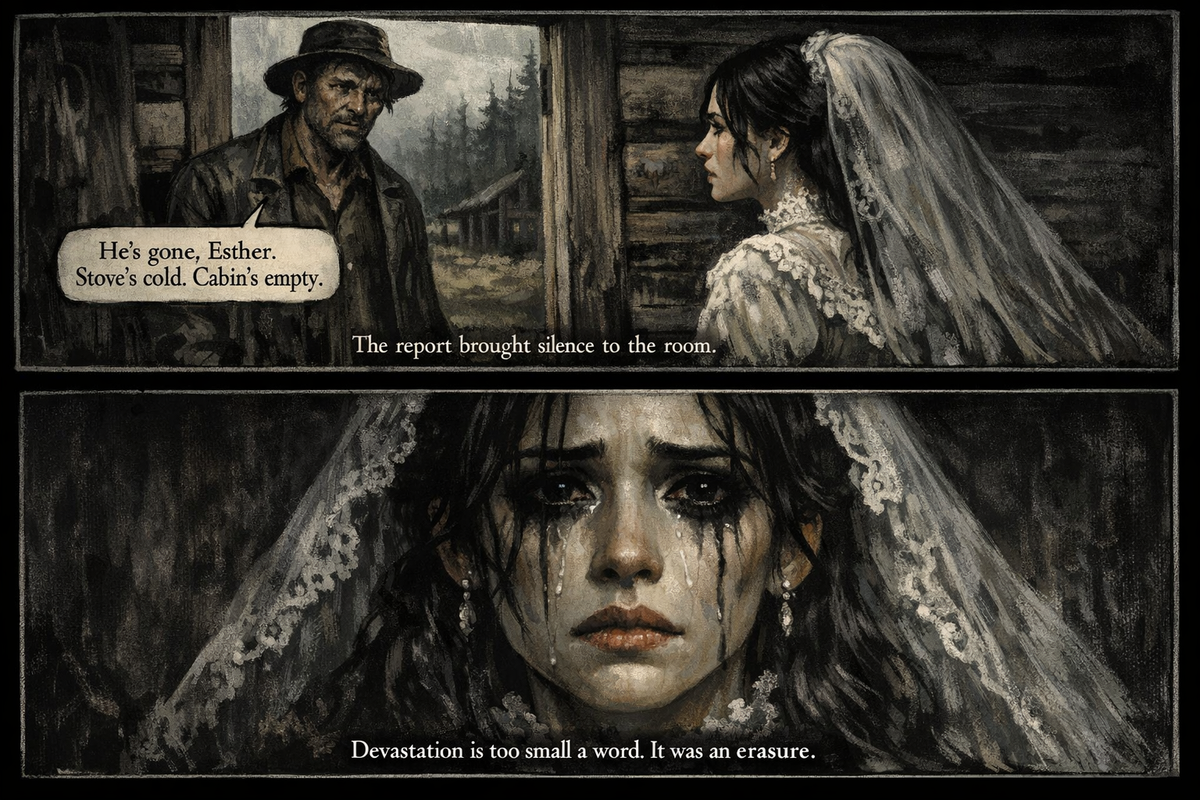
Whispers spread. A neighbor volunteered to check the groom’s nearby cabin. When he returned, his face said everything before his words did. The stove was cold. The bed untouched. The cabin is empty. No note. No tracks. No explanation. Whatever had happened, the man Esther loved had vanished without leaving a trace.
Grief hollowed her out. Esther refused food, refused water, and refused comfort. When neighbors tried to help, she pushed them away and shut herself inside the cabin. Black cloth covered the windows. The wedding dress stayed on her body. Summer faded into autumn, and the cabin became a sealed tomb of waiting.
Time rotted everything inside. The wedding cake cracked and yellowed, then collapsed into mold and dust. Flowers shriveled into brittle stalks. Frost crept across the windowpanes. When neighbors finally forced their way inside during winter, they found Esther dead in a chair, still wearing the dress, still facing the door. In that version of the story, she simply waited until waiting killed her.
But folklore is rarely satisfied with silence. Another version whispers that Esther could not bear the slow decay. That she left the cabin one night, crossing the frozen creek toward the old gristmill. That she climbed into its rafters, surrounded by shadow and creaking wood, and chose an end more immediate than time itself.
Death, however, was not the end of Esther Hale. Locals say that every year on August 12th, drivers crossing the old Beaver Creek bridge at night see a figure in white standing in the road. A skeletal bride with wild hair and a torn veil, glowing faintly in the headlights, reaching forward as if still waiting for someone who never came.
Others claim she roams the mill in winter, her pale shape visible in its dark windows as snow falls thick and soundless around it. They warn that if she touches you, she may take more than your breath—that she may take your soul. Whether Esther Hale died waiting or died choosing not to wait, the creek remembers her either way.
And so the legend remains, dressed in white and frozen in grief. Forever a bride. Forever a widow. Forever haunting Beaver Creek, still searching for the ending she was never given.