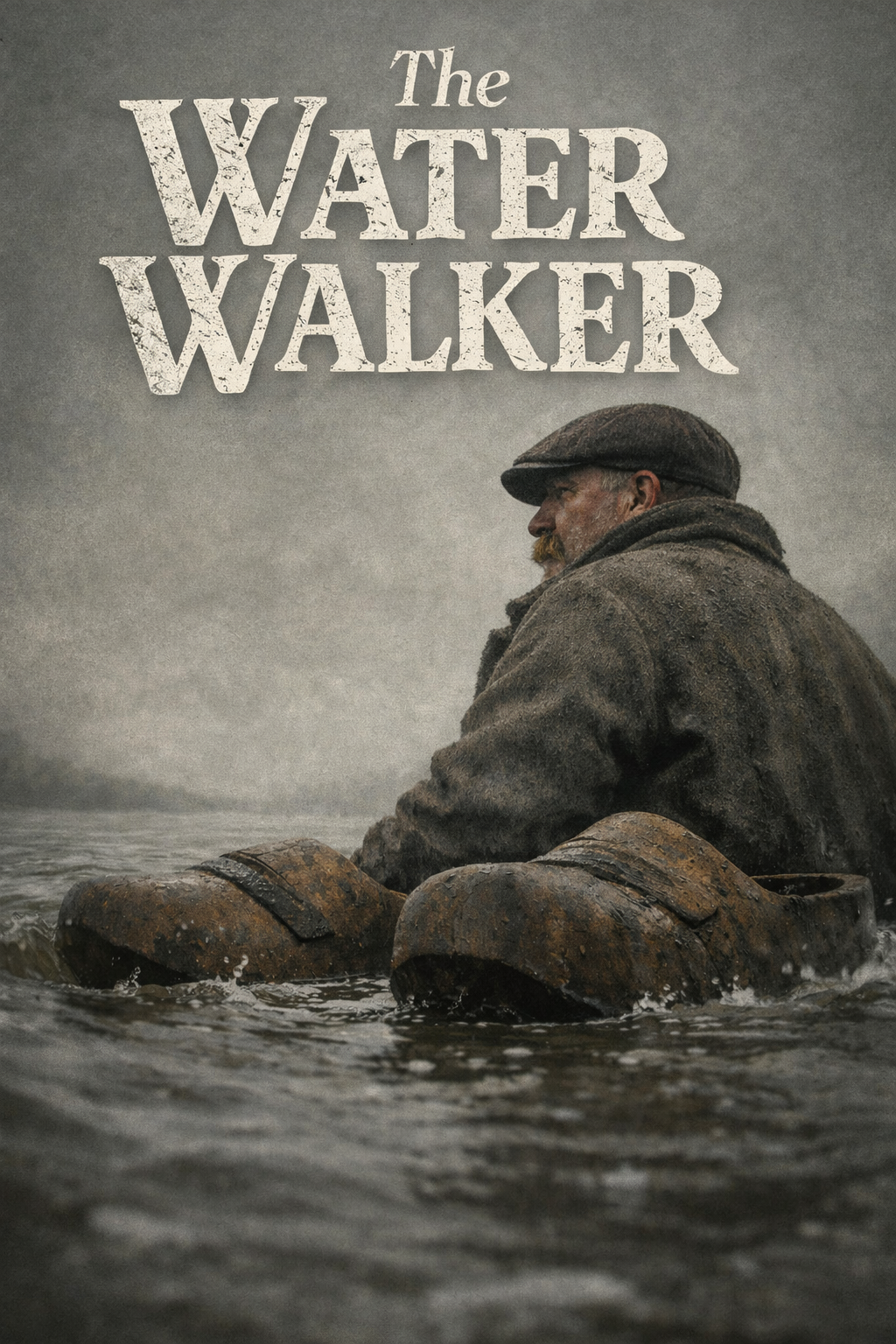
The Man Who Walked on Water: The Tragic True Story of Charles Oldrieve EP# 0003

In the late 19th and early 20th centuries, “walking on water” wasn’t a miracle—it was a spectacle. Crowds lined riverbanks to watch aquatic performers stride across the surface of lakes and rivers, their oversized shoes skimming through waves as newspapers marveled at their grace. Among these daredevils, none was more ambitious than Charles W. Oldrieve, a former Boston tightrope walker whose balance, nerve, and relentless curiosity pushed the art of water walking further than anyone before him.
Oldrieve didn’t settle for short demonstrations. While most aquatic pedestrians performed brief stunts near shore, he chased distance and endurance. At just 20 years old, he stunned the public in 1888 by walking more than 150 miles down the Hudson River from Albany to Manhattan in six frigid days. He only walked during daylight hours, sleeping on shore at night—sometimes discovering his wooden shoes frozen solid by morning. It was an early hint that Oldrieve wasn’t content to merely entertain; he wanted to prove something.
That desire soon turned grandiose. In the years that followed, Oldrieve announced plans to walk across the English Channel and even the Atlantic Ocean. Neither attempt materialized, but he continued refining his craft, walking over waterfalls and out to islands off the Massachusetts coast. His tightrope background helped him stay upright, but his true innovation lay in his method of moving forward—something far harder than floating.
Oldrieve’s secret was in his shoes. Each was a canoe-shaped slab of wood, roughly four and a half feet long and weighing about 20 pounds, fitted with hinged fins underneath. As his foot moved forward, the fins flattened; when he stepped down, they dropped, pushing against the water and creating traction. Without them, newspapers explained, he’d go nowhere. Over time, Oldrieve experimented constantly, eventually mastering backward walking and even turning in a circle—a feat he said took five years to perfect.
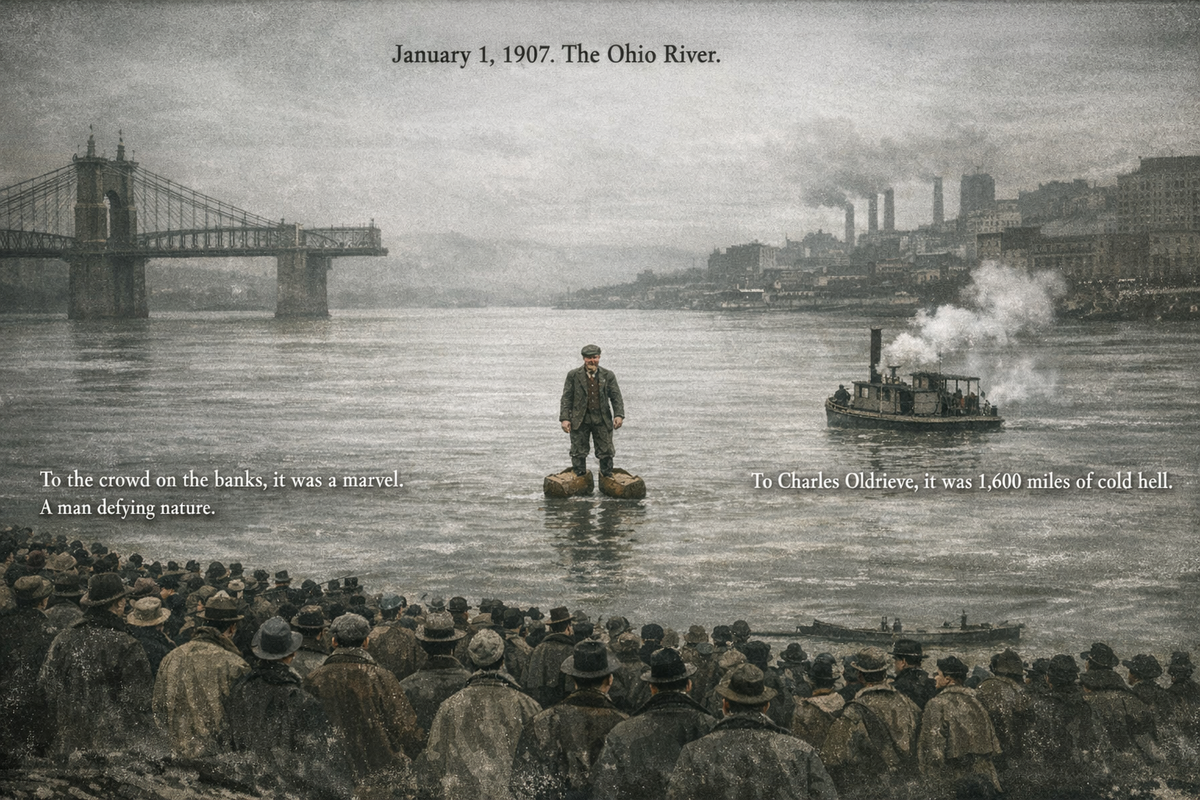
His most audacious challenge began on January 1, 1907. Oldrieve set off from Cincinnati with a bold goal: walk nearly 1,600 miles down the Ohio and Mississippi Rivers to New Orleans in just 40 days. A small gas-powered boat followed for support, while his wife, Caroline, rowed alongside him in a skiff. If he succeeded, Oldrieve claimed, he would win a $5,000 wager—a staggering sum for the time.
Progress was slow and punishing. Depending on river conditions, Oldrieve could manage up to five miles an hour, but his average pace was closer to two. Water sloshed into his shoes despite thigh-high rubber boots, forcing frequent stops to drain them. By the time he reached Henderson, Kentucky, he was two days behind schedule—but the delay didn’t dampen the excitement. Thousands gathered to greet him, examining his scorched-red shoes and cheering as he waved or puffed on a cigar mid-stride.
As the journey wore on, the toll became evident. Oldrieve battled rheumatism, chills, and fever, even as he made up lost time on the Mississippi. Crowds continued to swell at every river town, and newspapers tracked his progress like a traveling sensation. When he reached Baton Rouge on February 6, he was ahead of schedule again and confident that New Orleans lay within reach.
The final stretch was the most dangerous. The lower Mississippi was crowded with barges and powerful currents, and Oldrieve narrowly avoided death when he was almost sucked beneath one vessel near New Orleans. Rescued just in time, he pressed on, arriving on February 10—about an hour before his 40-day deadline. Exhausted but victorious, he declared the feat not worth repeating, even for five times the money.
That money, however, remained elusive. Though Oldrieve claimed he’d won the wager, he and Caroline never rushed to collect it. Later, he suggested his manager had cheated him, while historians note that wagers were often theatrical devices used to hype vaudeville acts. Oldrieve had little to show financially for his achievements and continued performing water-walking shows, complete with explosives and mock naval battles, alongside Caroline.
Tragedy struck later that same year. During a July 4 performance in Mississippi, Caroline was fatally burned while setting off explosives. Devastated by her death, Oldrieve took his life soon after, dying penniless and buried in an unmarked grave. Yet his legacy endured. Decades later, others crossed oceans using water shoes and oars—but none matched Oldrieve’s raw originality. With his Cincinnati-to-New Orleans walk, Charles Oldrieve did what he set out to do: create a record that, in spirit and scale, has never truly been beaten.