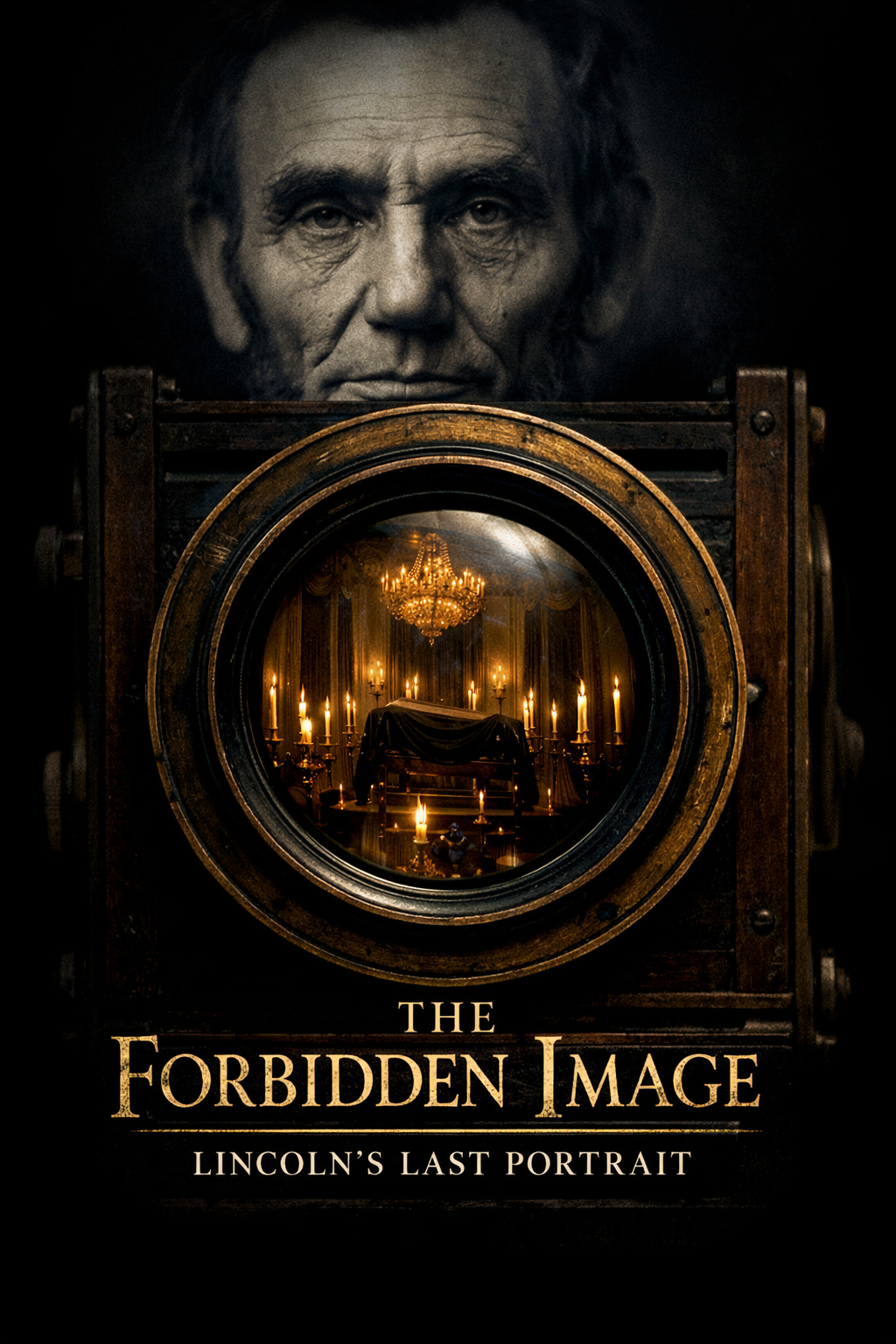
The Forbidden Image: Lincoln’s Last Portrait: The Secret Photo the Government Tried to Destroy EP #0006

On the morning of April 15, 1865, the body of President Abraham Lincoln lay inside the White House, wrapped in black cloth and guarded by Union soldiers. Outside, the nation reeled in shock. Inside, grief mixed with fear. Lincoln had been murdered in public, and his face—already a powerful national symbol—was suddenly something far more dangerous.
In the 19th century, postmortem photography was common. Families routinely photographed their dead as keepsakes, a final act of remembrance in an era before modern mourning rituals. But Abraham Lincoln was not an ordinary man. Government officials feared that a photograph of his assassinated body could become a morbid collectible, a rallying image for political extremists, or a tool for Confederate propaganda.
Secretary of War Edwin M. Stanton acted swiftly and quietly. An order went out: no photograph of Lincoln’s body was to be published. The official funeral imagery would show Lincoln as the nation wished to remember him—alive, composed, and dignified. In death, his image would be tightly controlled.
And yet, despite the order, a photograph was taken. On April 16, 1865, Lincoln’s body was placed in a temporary coffin in the East Room of the White House. Curtains were drawn, guards stood watch, and access was limited to embalmers, family members, and select officials. Somehow, a photographer slipped inside.
Most historians believe the photographer was Thomas C. Ayres, a Pennsylvania native who had been quietly documenting scenes around Washington during the funeral preparations. Using a wet-plate camera, he captured Lincoln’s face as it lay in the coffin—eyes closed, beard still, the bullet wound obscured by shadow. It was the only photograph ever taken of a dead U.S. president.
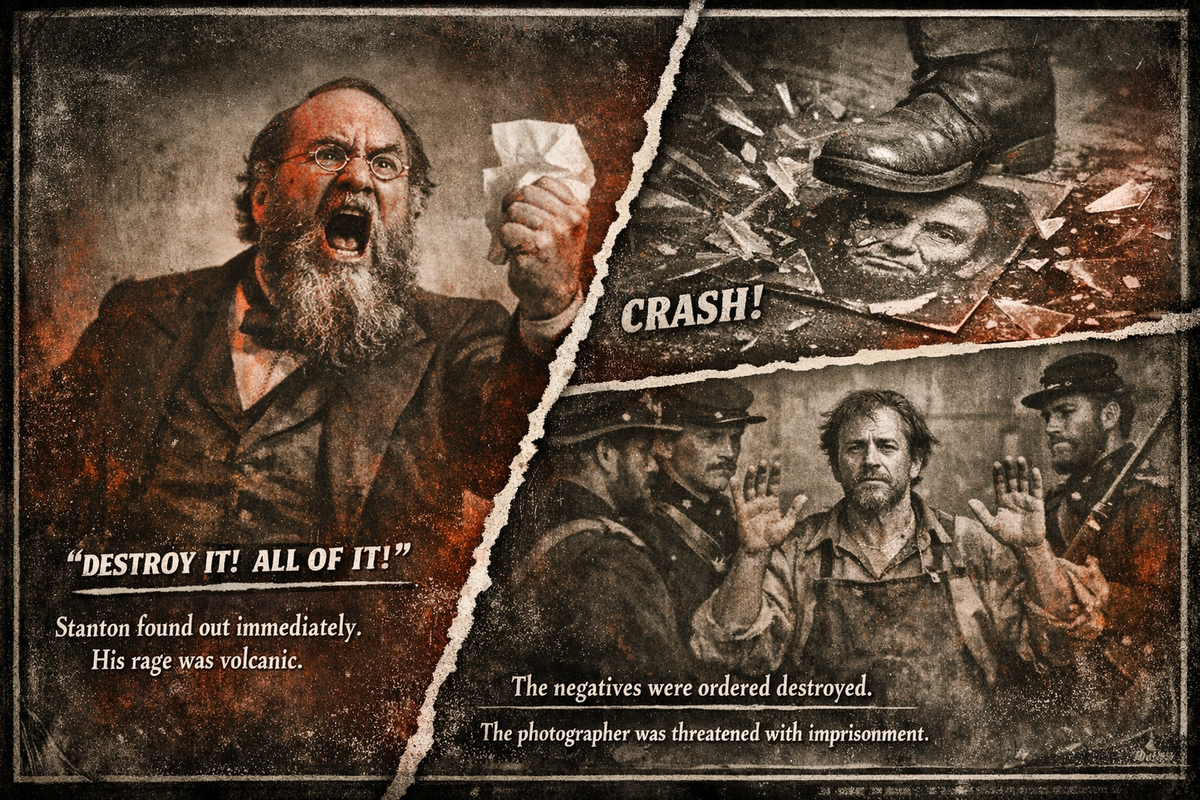
Stanton soon learned of the image, and his reaction was immediate and severe. The negatives were ordered to be destroyed. The photographer was warned never to sell or reproduce the image. Officially, the photograph ceased to exist. History moved forward as if it had never been taken.
For decades, this version of events remained accepted. No newspapers printed the image. No archives listed it. No known family albums contained it. Only whispers remained—embalmers who spoke in hushed tones, funeral workers who claimed they had seen it, and Robert Todd Lincoln himself, who later acknowledged that such a photograph had once existed and had been deliberately suppressed.
Then, nearly seventy years later, the impossible resurfaced. In 1931, a man in New York contacted the Lincoln National Life Foundation with a startling claim: he possessed a photograph of Abraham Lincoln lying in his coffin. The image, he said, had been hidden in a family album belonging to his grandfather, a funeral worker present during the White House embalming.
When experts examined the photograph, doubt quickly vanished. Lincoln’s distinctive facial structure, his beard, the specific coffin, the pillow and cloth, and even the lighting matched known funeral arrangements exactly. Smithsonian historians, Civil War scholars, and Lincoln specialists all reached the same conclusion. The photograph was real.
The government’s original fear became clear in hindsight. Images of dead leaders had historically been transformed into political martyrs, religious icons, and tools of radical movements. The nation was already on the verge of instability due to Lincoln's assassination; a widely circulated photograph of his corpse could potentially exacerbate the situation. So the image was not buried in a grave—but in silence.
The Lincoln National Life Foundation in Fort Wayne, Indiana strictly controls the photograph today. Even now, the Lincoln National Life Foundation in Fort Wayne, Indiana, rarely displays it, never reproduces it commercially, and carefully guards it. More than 160 years later, it remains one of the most powerful—and restricted—images in American history: the photograph that was never meant to survive but somehow, against orders and against time, did.