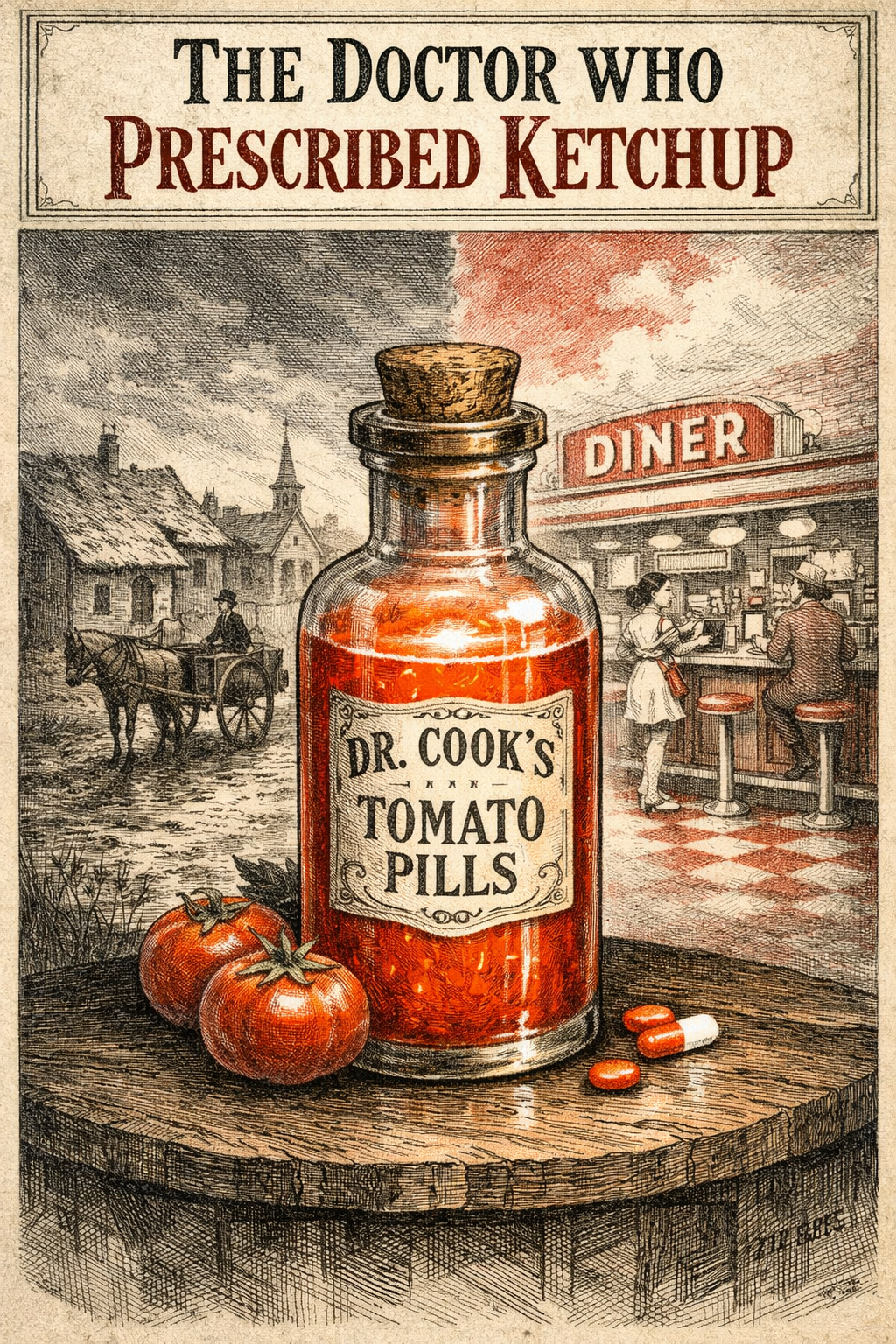
The Doctor Who Prescribed Ketchup EP# 0012

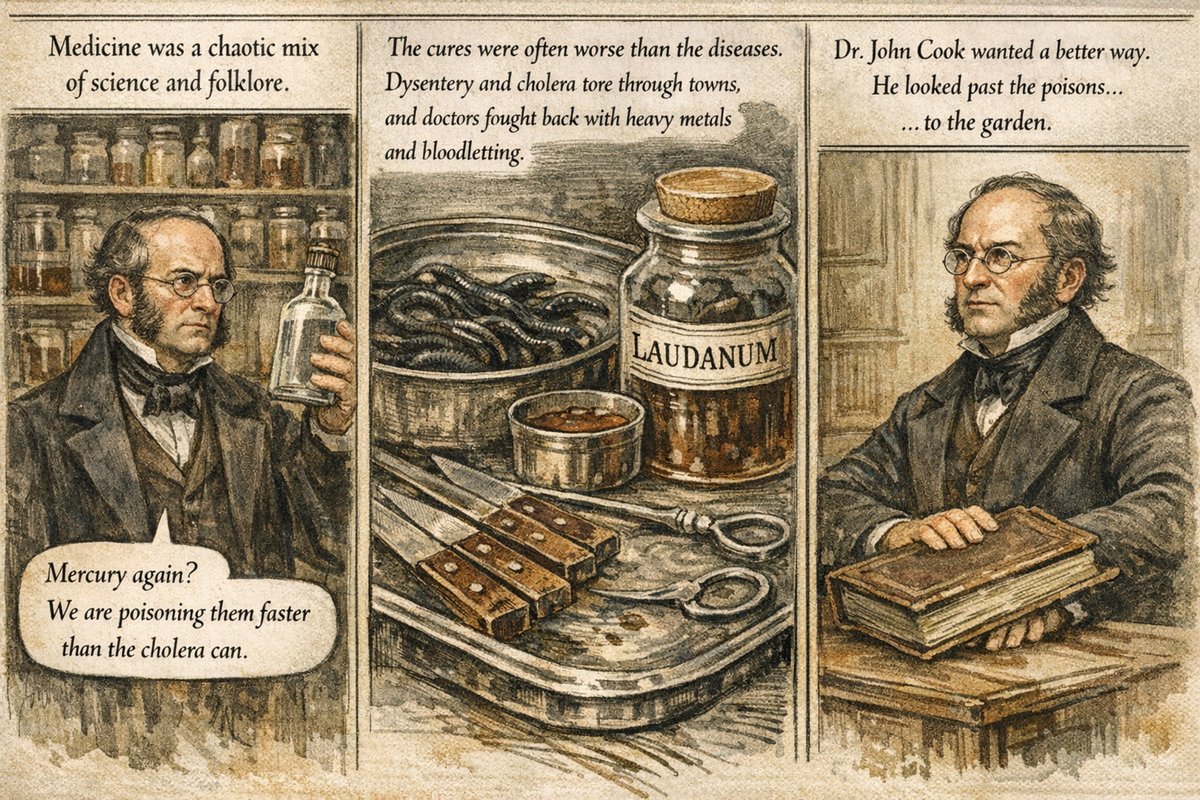
In the early 1830s—long before ketchup was squeezed onto hamburgers and French fries—it sat on pharmacy shelves beside laudanum, mercury tonics, and bitter herbal syrups. America was still young, and medicine was a strange frontier: half science, half folklore, and often flavored with desperation.
At the center of this unlikely story was an Ohio physician named Dr. John Cook. He practiced medicine in a time when doctors routinely bled patients, dosed them with heavy metals, and hoped for the best. If the illness didn’t kill you, the treatment might.
Ohio in the 1830s was a land of muddy roads, riverboats, and constant sickness. Cholera, dysentery, and stomach ailments swept through towns with terrifying speed. People blamed foul air, bad water, and unseen forces. Doctors were expected to help—but few truly could.
Dr. Cook believed he had found something different.
Instead of cutting veins or poisoning patients with mercury, he turned to something simple, cheap, and bright red: tomatoes.
At the time, tomatoes were still viewed with deep suspicion. Many Americans believed they were toxic—even deadly. But Cook had been reading European medical journals that praised tomatoes for their digestive benefits. He became convinced the fruit could cleanse the body, particularly the stomach.
So in 1834, Cook created something revolutionary: a concentrated tomato medicine. Thick, tangy, and intensely flavored, it was sold as a cure for indigestion, bloating, diarrhea, and upset stomachs.
In other words…
He sold ketchup.
Not the sweet condiment we know today, but an early medicinal extract—essentially a powerful tomato concentrate. Cook marketed it in liquid and pill form, promising it would “purify the blood” and “restore the digestive organs.”
And people believed him.
Bottles of tomato medicine spread across the country. Other doctors copied the idea. Ketchup—still spelled in various ways—became part of America’s booming patent-medicine industry. It was swallowed by the spoonful, not poured on food.
For a time, ketchup was taken more seriously than most doctors.
But medicine evolved.
By the late 1800s, scientific testing began separating real treatments from flavored hope. Tomato medicine slowly disappeared from pharmacy shelves. Its medical claims quietly faded into embarrassment.
But something unexpected happened.
Food companies realized people liked the taste.
They sweetened it. Smoothed it. Preserved it. And by the 1890s, ketchup stopped being a cure and became a condiment.
The red medicine of Ohio became the red sauce of America.
Today, ketchup sits on nearly every table in the country. Few people realize it was once prescribed to the sick, spooned out like cough syrup, and trusted as a medical breakthrough.
And in a strange way…
Maybe Dr. John Cook wasn’t entirely wrong—just a little early and a lot optimistic.