The Doctor Who Became Death: The True Story of Harold Shipman EP #0005

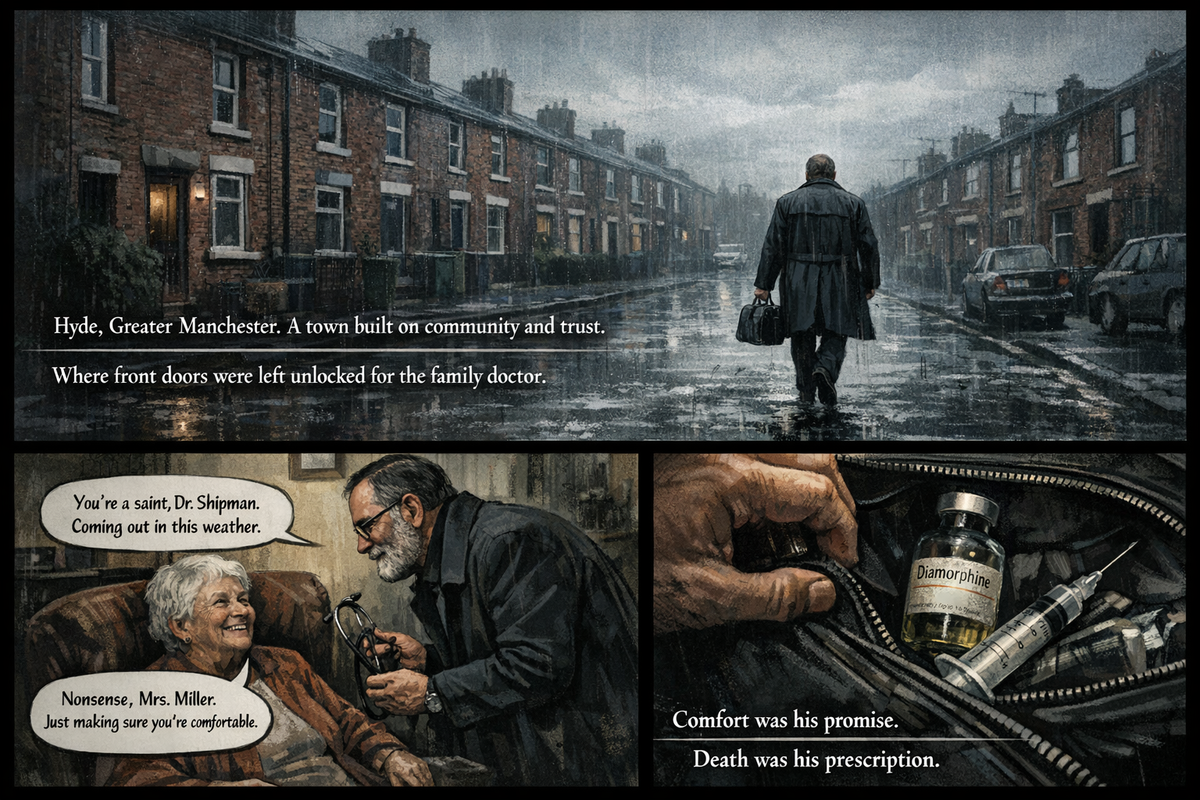
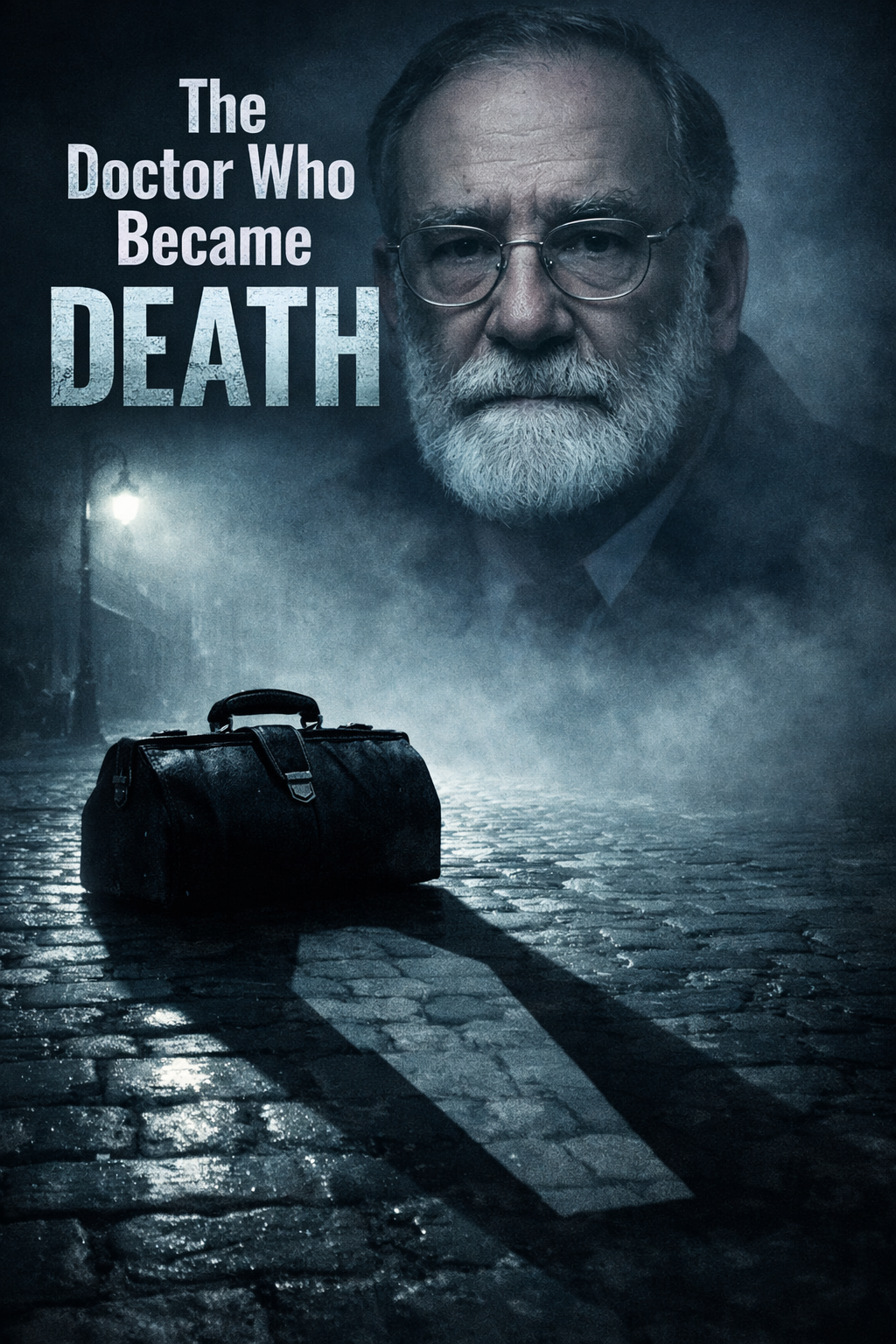
In quiet towns, trust is currency. In Hyde, Greater Manchester, people trusted a man with a stethoscope, a warm smile, and a black medical bag. Harold Shipman was the doctor everyone relied on—the one who made house calls in the rain, who listened patiently, and who never rushed the elderly out the door.
Behind that calm exterior, however, lived one of the most prolific serial killers in modern history.
This is the story of how a trusted physician became death itself.
Hyde was the kind of place where front doors stayed unlocked and the family doctor was welcomed like kin. Red brick row houses lined damp streets, and neighbors looked out for one another.
Harold Shipman walked these streets daily, medical bag in hand, a familiar silhouette in the fog. For the people of Hyde, Harold Shipman represented more than just a medical professional; he was a tangible source of reassurance.
No one questioned him when he entered their homes. No one suspected that the shadow cast by his bag would stretch into the shape of a coffin.
Inside cozy living rooms, Shipman performed kindness flawlessly. Elderly patients smiled as he leaned in, stethoscope pressed gently to their chests. He spoke softly. He listened. He made them feel safe.
“You’re a saint, Doctor,” they often said.
Shipman accepted their gratitude calmly, opening his medical bag with practiced ease. The expected medical tools were inside, along with a surprising addition: diamorphine, a potent opioid that could end life in mere minutes.
Comfort was his promise. Death was the result.
Shipman’s fixation with death began in adolescence. At 17, he sat by his mother’s bedside as she died of cancer. He didn’t look away when the doctor administered morphine. He watched closely.
As the drug eased her pain and her body relaxed, Shipman saw something few noticed: absolute control. One injection. One decision. Life reduced to chemistry.
That moment didn’t horrify him. It fascinated him.
By the 1970s, Shipman was a young doctor battling addiction. In 1974, he was caught forging prescriptions to feed his dependence on opioids. He was convicted, fined, and sent to rehabilitation.
It should have ended his career.
Instead, the medical board allowed him to return to practice. Shipman stood before them unapologetic, confident, and unashamed—and they believed him fit to continue.
The system failed. A predator was given cover.
In the 1990s, Shipman opened a solo medical practice in Hyde. Without colleagues or oversight, he gained complete autonomy.
His waiting room filled quickly—mostly with elderly patients who adored him. He was attentive. He was patient. He was popular.
“He’s the only one who listens,” they said.
“He’s such a lovely man.”
Behind closed doors, Shipman found what he wanted most: privacy.
Shipman targeted elderly women living alone—patients unlikely to raise suspicion. He injected them with lethal doses of diamorphine under the guise of treatment.
He didn’t rush away. He sat and watched.
When death came, he calmly signed the certificate: Natural Causes. Because he was the doctor, no autopsies were ordered. No questions were asked.
Authority was his camouflage.
Between 1975 and 1998, the numbers grew silently. One armchair death blended into the next.
Investigators later estimated Shipman may have killed over 250 patients, making him one of the most prolific serial killers in recorded history.
He altered medical records digitally, rewriting symptoms and diagnoses to justify each death. A hidden archive of lies—a digital graveyard—sat quietly on his computer.
In 1998, Shipman killed Kathleen Grundy, a former mayor of Hyde. Then, driven by arrogance, he made a critical mistake.
He forged her will.
The document left her entire estate to him. It was poorly typed and obvious. Kathleen’s daughter, Angela Woodruff, a lawyer, knew instantly something was wrong.
“My mother didn’t own a typewriter,” she told police.
That one phone call revealed everything.
Police exhumed bodies. Forensic teams worked under floodlights in graveyards long thought peaceful.
Every toxicology report told the same story: lethal levels of diamorphine.
Death after death. Pattern after pattern. The trusted doctor was finally exposed.
In October 1999, Harold Shipman stood trial. He showed no remorse. He denied everything. He challenged the science.
The judge’s words were devastating:
“You have abused the trust of your patients in the most wicked manner imaginable.”
Shipman was convicted of 15 murders and sentenced to life imprisonment—never to be released. Hundreds more deaths were attributed to him after the trial.
On January 13, 2004, Harold Shipman ended his life in prison using a bedsheet tied to window bars. He was 57—one day shy of his birthday.
He left no confession. No explanation. No closure.
Only absence.
Harold Shipman didn’t break into homes. He was invited in. He wore authority like armor.
And when the door opened, people thanked him.
His story remains one of the darkest examples of how trust, once weaponized, can become lethal.