The Arsenic Heart: The Legend of Ceely Rose: The Girl Who Poisoned Her Family for Love EP #0004

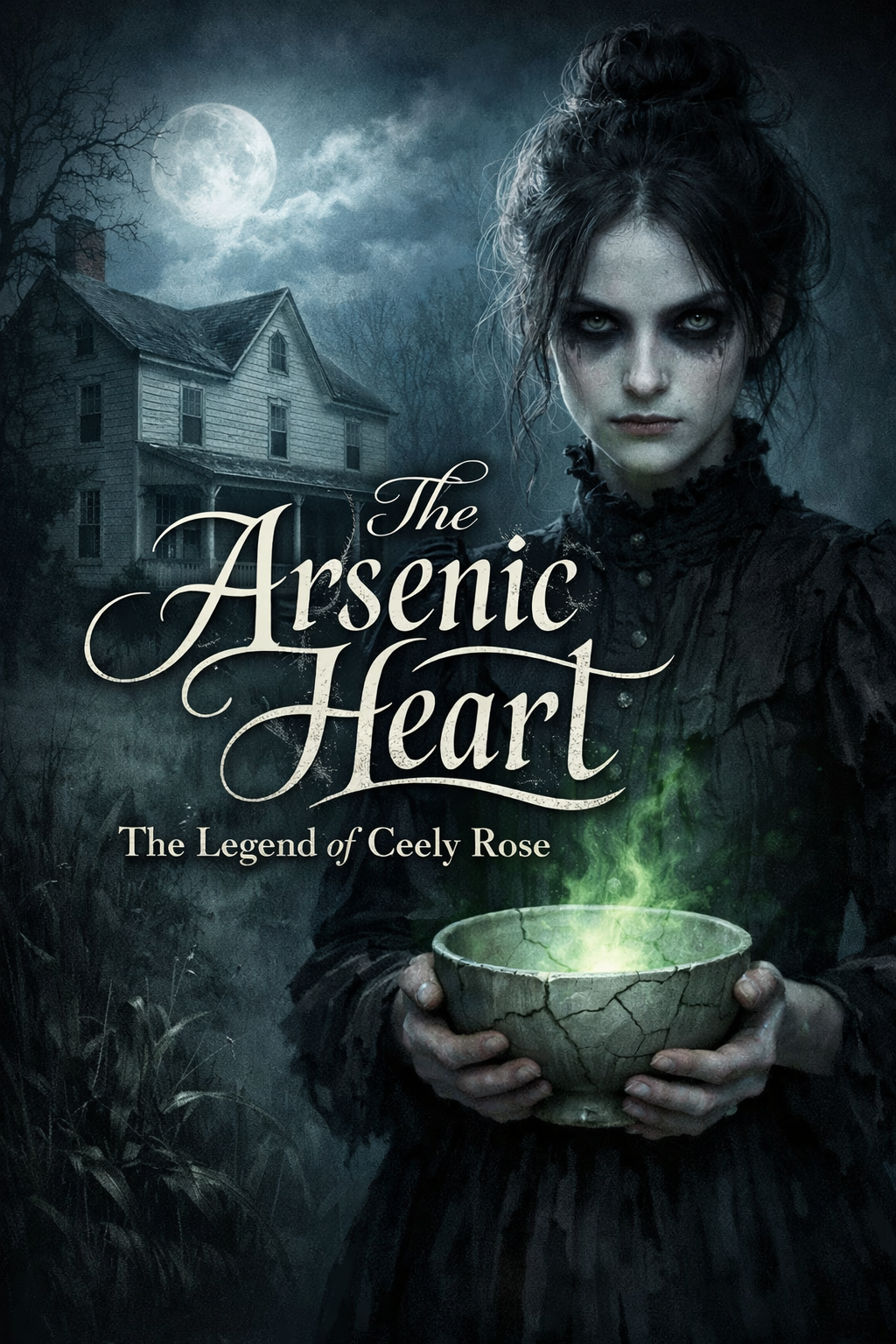
The story of Ceely Rose begins in the quiet hills of Lucas, Ohio, in the summer of 1896—a season remembered not for storms or drought, but for a heat so stagnant it seemed to press thoughts inward. The Rose farmhouse stood alone against the rolling fields, its white boards already weathered, its windows watching more than they revealed. In those fields worked Guy Berry, a young farmhand whose presence became the center of a fixation that would rot a family from the inside out.
Ceely Rose was twenty-three, pale and withdrawn, and known in town more for her silence than her company. She watched Guy from the edges of the fields, hidden behind tall weeds, interpreting glances and gestures as promises spoken to the wind. In her mind, devotion had become destiny. Each look confirmed a love that no one else could see—and no one else could stop.
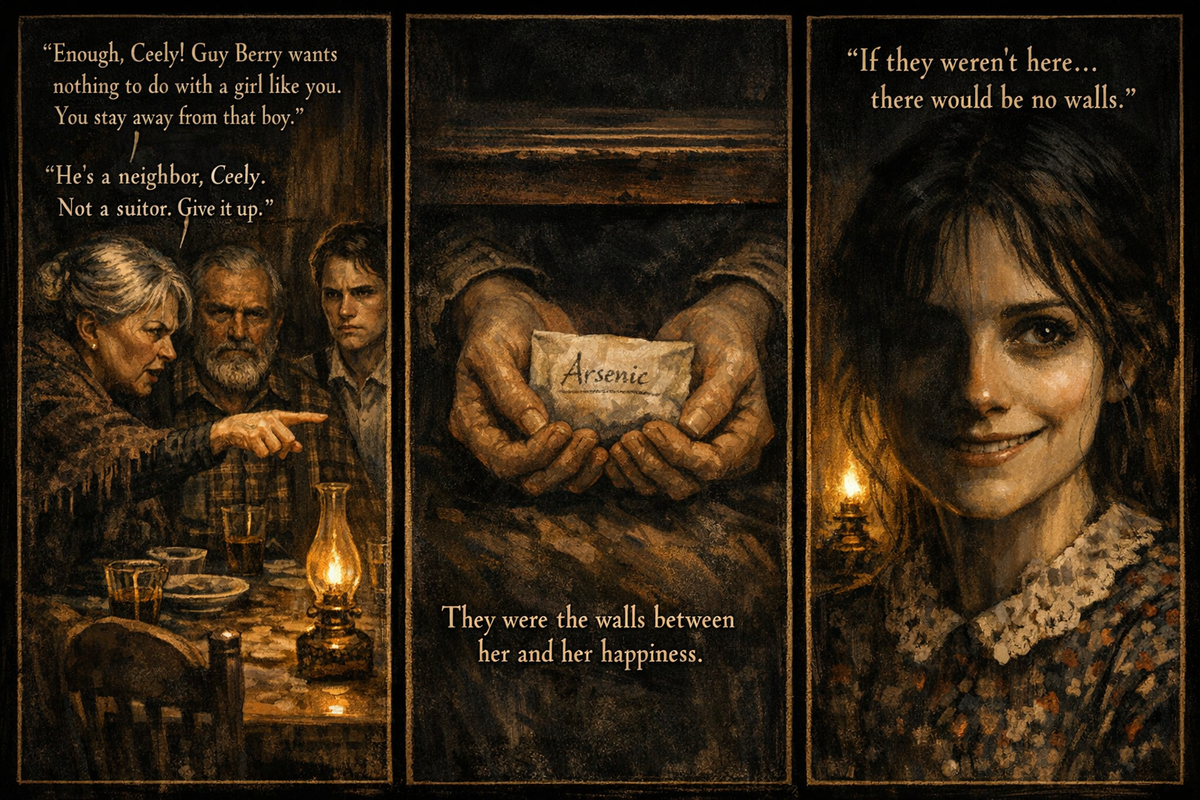
Inside the Rose house, reality was colder. Her parents and brother saw Guy Berry for what he was: a neighbor, nothing more. At the dinner table, lit by a single oil lamp, warnings were delivered with stern voices and pointed fingers. Ceely was told, again and again, that the boy wanted nothing to do with her. Each denial tightened something behind her dark, vacant eyes.
What her family didn’t see was what Ceely carried beneath the table—small, folded, and deadly. A packet labeled “arsenic,” purchased quietly, clutched in trembling hands. To Ceely, her family had become walls blocking her happiness. And walls, she believed, could be torn down.
The sickness came without drama. One meal. One evening. As her parents and brother collapsed in agony around the kitchen table, Ceely stood calmly at the stove, stirring cottage cheese with steady hands. Groans filled the room. Breath failed. One by one, the walls fell. By morning, David Rose, Rebecca Rose, and Walter Rose were dead—felled by a white powder that left no visible wound.
Ceely showed no emotion as the bodies cooled at her feet. There were no tears, no screams, and no confession. Only stillness. When questioned, her answers drifted between delusion and detachment, a mind untethered from consequence. The court would later call it insanity, but the valley called it something else entirely.
At trial, Ceely Rose was found not guilty by reason of insanity. The law absolved her, but it did not free her. She was sent away to an asylum, removed from the hills that had fed her obsession. There she remained, a ghost long before her death, until her final breath left her in 1934. Official records closed her story—but folklore did not.
Today, the Ceely Rose House still stands near Malabar Farm State Park, its white boards darkened by age, its windows hollow. Visitors call it a monument to poisoned love, a place where the past lingers too loudly. Paranormal investigators speak of crying heard through locked doors and of cold air and unseen movement within empty rooms.
Photographs taken at the house often reveal what eyes cannot—misty shapes forming in upper windows, faces pressed against glass where no one stands. Some claim the outline is unmistakable: a woman in black, her features sunken, her gaze fixed outward toward the fields.
They say Ceely Rose is still waiting—watching the land where Guy Berry once worked, candlelight flickering in the darkness. The house is locked. The family is buried. But in the quiet of Malabar Farm, her vigil continues. Love turned to poison, and poison turned to legend, leaving behind a farmhouse that refuses to forget.